Acoustic Engineering: Soundscapes That Elevate Conversation
How reverberation, speaker placement, and musical pacing are engineered so conversation never has to compete with the room.
Silence is not the absence of sound, but the presence of absolute acoustic harmony—where every whisper carries weight and no voice must compete to be heard.
I. Epigraph & Thesis
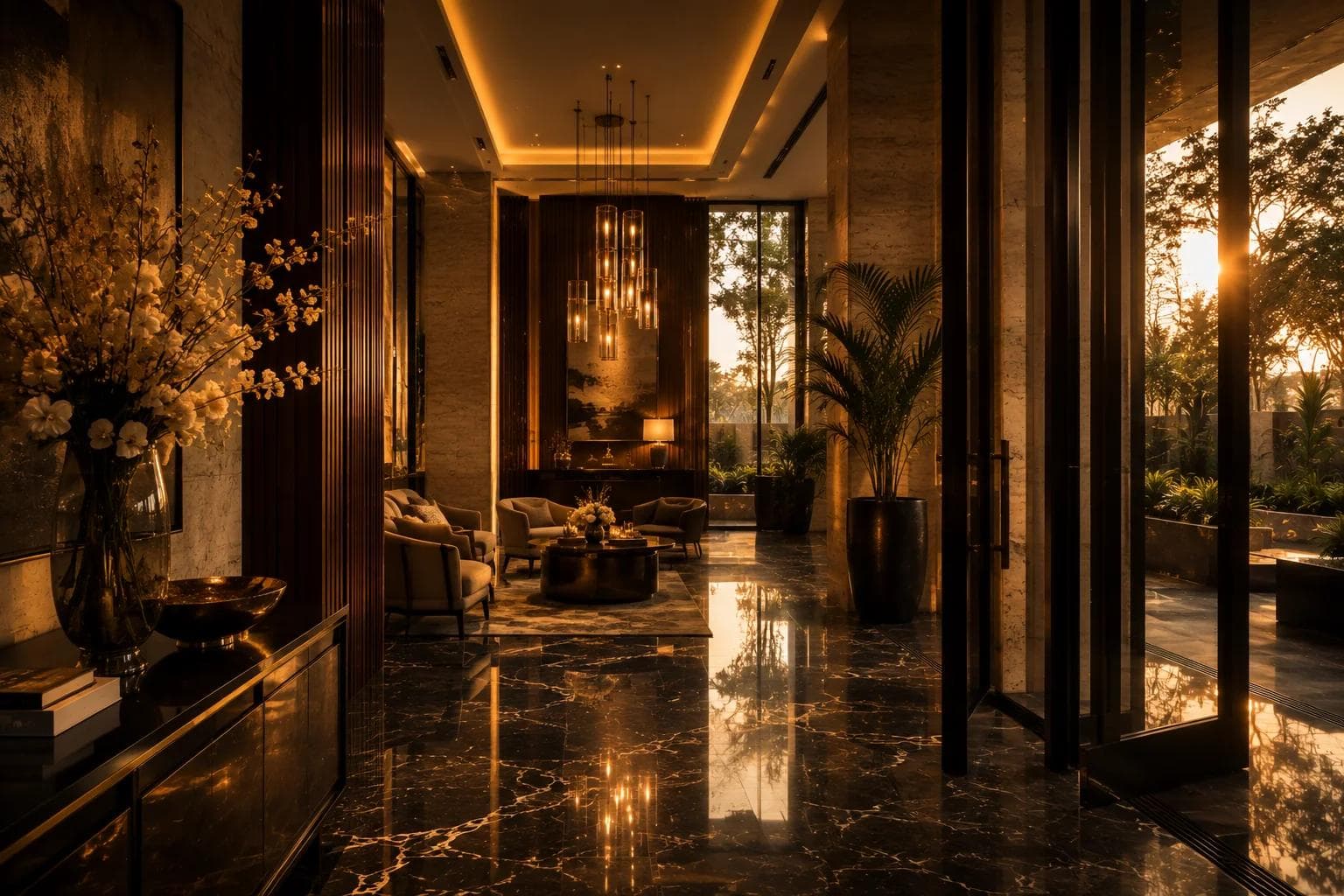
In grand reception halls, stone-clad courtyards, and vaulted dining salons, the most subtle destroyer of atmosphere is invisible. It is not poor lighting or flawed service, but acoustic neglect. When sound waves bounce off hard surfaces unchecked, the reverberation time lengthens, turning natural conversation into a stressful exercise in volume escalation.
The thesis of acoustic engineering in private affairs is clear: sound is a primary driver of human energy and social intimacy. To elevate a gathering, the sonic environment must be engineered with the same rigor as the structural build. Controlling reverberation times, ambient bleed, and musical crescendo allows guests to converse effortlessly, maintaining emotional composure throughout the evening.
II. The Invisible Architecture
Every space possesses a sonic signature dictated by its geometry, ceiling heights, and surface materiality. When guests enter a room, their subconscious immediately registers the acoustic decay. In a poorly calibrated space, as more people speak, the noise floor rises exponentially—a phenomenon known as the Lombard effect. Guests involuntarily raise their voices, strain their hearing, and experience rapid cognitive fatigue.
Conversely, an acoustically engineered soundscape acts as an invisible cushion. By absorbing excess high-frequency reflections and diffusing mid-range resonance, the space creates micro-environments of natural privacy. Guests sitting three feet apart can share a quiet confidence without the risk of ambient bleed, while the overall room maintains a warm, vibrant murmur rather than a chaotic din.
III. Principles of Execution
Mastering atmospheric acoustics requires a balance of physical treatment, directional audio distribution, and psychoacoustic choreography.
1. Managing Reverberation Time (RT60)
The gold standard for effortless conversation in a dining or salon setting is a reverberation time (RT60) between 0.6 and 0.8 seconds. Achieving this in marble-floored or glass-walled estates requires discreet structural interventions:
- Concealed Absorption: Integrating micro-perforated acoustic backing beneath table linens, dense custom drapery, and low-profile upholstered wall panels.
- Ceiling Baffling: Deploying architectural ceiling diffusers masked within floral installations or custom lighting gantries to shatter flutter echoes before they reach guest ears.
- Textile Layering: Utilizing heavy wool-felt underlays beneath hand-woven carpets to eliminate impact noise from footwear.
2. Decentralized Audio Architecture
The common mistake of placing high-output speakers in room corners creates "hotspots" of deafening volume and "dead zones" of silence. Luxury audio design relies on ultra-decentralized point-source speaker arrays:
- Micro-Zone Distribution: Utilizing numerous small, full-range architectural speakers hidden at ear level throughout the space, each running at a low decibel level.
- Uniform Coverage: Ensuring ambient music envelops the room uniformly, allowing guests to move seamlessly between zones without experiencing jarring volume shifts.
- Low-Frequency Control: Subwoofers are decoupled from structural floors and distributed in array configurations to prevent muddy, low-end rumble that bleeds into speech frequencies.
3. Temporal Soundscaping and Pacing
Music is not background noise; it is a temporal vector that guides guest emotion and pacing across the phases of an evening:
- Arrival (55-65 dB): Subtle, organic textures with slow tempo to soothe arriving guests and encourage measured, reflective conversation.
- Dining (60-68 dB): Acoustic arrangements stripped of harsh vocal frequencies (1 kHz-4 kHz) that compete directly with human speech, creating a warm, non-intrusive backdrop.
- Late Night (70-82 dB): A gradual shift toward rich, rhythmic soundscapes as the dining phase concludes, subtly raising room energy and encouraging movement without shocking the senses.
4. Acoustic Zonation and Masking
In high-profile gatherings, privacy is paramount. Sound masking techniques—such as strategically placed continuous water features or tuned pink-noise emitters near egress points and private alcoves—ensure that sensitive conversations remain strictly confidential, even in open layouts.
IV. Failure Modes of the Conventional
Acoustic integrity is frequently compromised by standard event production mistakes:
- The Glass-and-Stone Trap: Hosting dinners in untreated minimalist architecture where hard, reflective surfaces cause speech intelligibility to plummet.
- Centralized Audio Power: Relying on two massive speaker stacks that blast the front tables while leaving the rear of the room unable to hear musical nuances.
- Frequency Competition: Playing music with heavy mid-range instrumentation or forward vocals during dinner, forcing guests to speak over the soundtrack.
- Unmanaged HVAC Noise: Neglecting the low-frequency hum of temporary air conditioning units, which raises the ambient noise floor and drains guest energy over time.
V. The Residue
When an evening is acoustically balanced, guests rarely comment explicitly on the sound. Instead, they remark on how extraordinary the conversation was, how comfortable they felt, and how hours passed like minutes.
By treating acoustic engineering as a fundamental architectural pillar, Maison Doclar transforms raw spatial volume into a sanctuary of human connection. The result is an environment where speech is crisp, intimacy is protected, and the energy of the gathering flourishes without effort.